
More Than a Simple Screening
A comprehensive eye exam is more than a simple screening or sight test for visual clarity that children may receive in school. A sight test is not enough to determine whether or not your child has a vision condition that requires more than glasses to solve. In fact, simple sight tests miss up to 75% of vision problems in children.
Your child should have regular, comprehensive eye examinations performed by an optometrist. An eye doctor can monitor the health of their eyes, assess their visual skills and development, and, of course, make sure they can see well too.
It’s never too early to practice proactive eye care with your child. Book their eye exam today.
How Often Does My Child Need an Eye Exam?
Regular eye exams for children should begin in infancy. The American Optometric Association recommends that children have their first eye exam between 6 and 12 months old.
A second eye exam is recommended between the ages of 3 and 5 to check that their visual skills are progressing appropriately. Starting just before first grade, your child should begin receiving annual eye exams, which we recommend continue into adulthood.
Success in school, sports, and social environments requires good eyesight. Help your child develop a strong foundation for their visual skills through routine eye exams.
What Happens During a Kid’s Eye Exam?
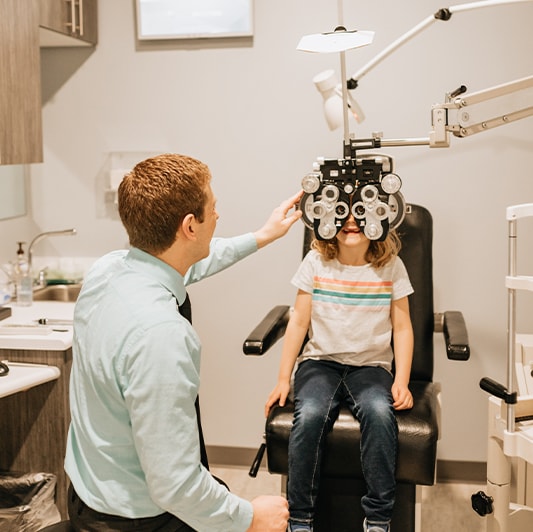
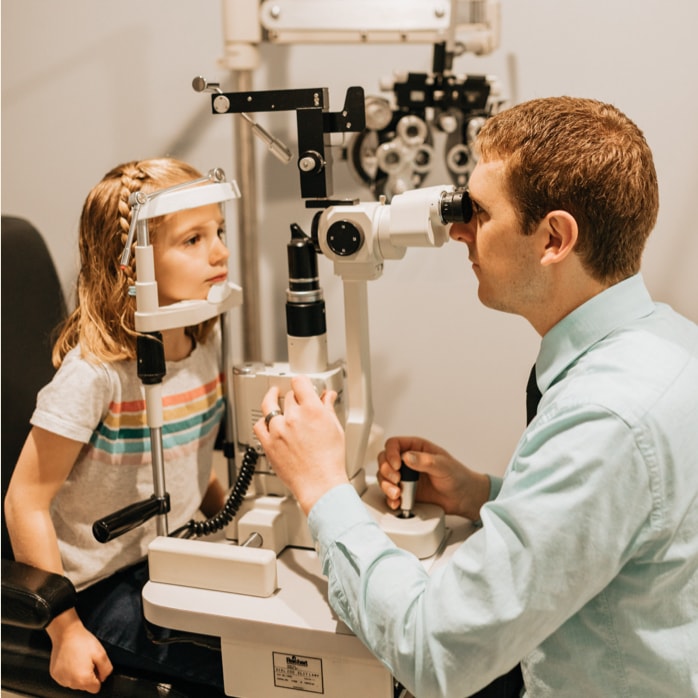
Eye exams for children will vary depending on their age. We use age-appropriate testing tools to assess their vision and make sure their visual skills are developing as expected.
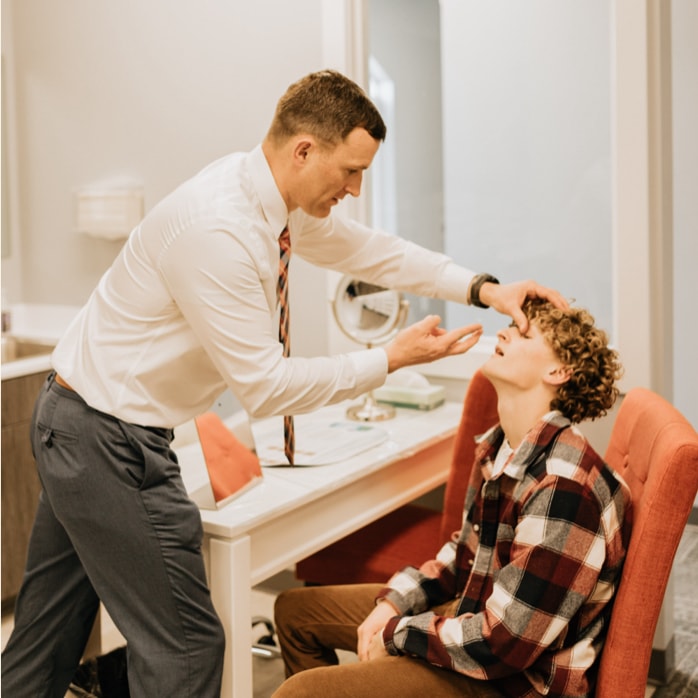
We’ll check your child’s eye tracking abilities to see how well their eyes follow a moving object. We’ll also assess their eye alignment using the cover test, where we cover one eye at a time and check eye movement and alignment. As well, we will check the responsiveness of your child’s pupils to changes in light.
Depending on their age, we’ll use different tools to check their visual acuity. We may use pictures and icons for younger children. Additionally, we will take pictures of their eyes using retinal imaging to check their eye health, test their peripheral and color vision, and determine if they have or are at risk of developing myopia (nearsightedness).
During your child’s eye exam, we will take our time and explain the different tests to your child in terms they can understand. Our optometrists are parents too, and they know that patience and connection can help your child feel comfortable during their exam.
The What and Why of Myopia Control
Myopia, or nearsightedness, is a common vision problem that affects more than 40% of Americans, and it’s on the rise in children.
During childhood, myopia can progress rapidly, leading to frequent changes in your child’s eyeglass prescription. However, their prescription is not the only thing that experiences changes. As myopia worsens, the eye begins to stretch and elongate. If your child’s eye grows too long, their risk of developing vision-threatening complications later in life increases significantly.
Myopia control refers to treatment methods that focus on slowing myopia progression during childhood and helping to stabilize their prescription at a lower level of nearsightness than would occur without intervention.
How Vision Affects Learning
Up to 80% of childhood learning is visual; however, having 20/20 eyesight is not the only important part of vision that children need to succeed. Every child requires basic visual skills for effective reading and writing.
Clear vision is crucial for children to read the board and worksheets. But they also need to quickly and accurately focus their eyes when looking between the board and their desk. Eye tracking skills are necessary for following moving objects, like a thrown ball, or reading along a line of text. Eye teaming, the coordinated use of both eyes, impacts depth perception, and poor teaming can hinder focusing and tracking.
During your child’s eye exam, we check for possible signs of vision problems that extend to their visual development. Children who struggle to focus on schoolwork, have difficulty learning to read, or have poor coordination may be experiencing a vision problem. The sooner we can assess and detect vision problems, the more effective our treatment methods can be.
Signs that My Child Has a Vision Problem
Many children struggle to express vision problems for a variety of reasons. Some children are too young or lack the vocabulary to express their experiences. Others may lack a baseline of what constitutes good vision and may think that everyone sees the way they do.
Comprehensive eye exams are an effective way to assess for vision problems in children at any age; however, there are also some signs you can watch for at home. Be on the lookout for the following:
- Frequent tilting of the head
- Holding objects close to the face
- Limited attention span
- Frequent eye rubbing
- Excessive blinking
- Covering one of the eyes to see or read
- Complaining of discomfort or headaches
- One eye turns in or out
- Struggling to learn the alphabet or how to read
If you notice any of these symptoms, bring your child in for an eye exam. Vision problems can often mimic the behaviors or symptoms of children with ADHD or learning difficulties like dyslexia.
It’s important to first check for any visual problems through an eye exam before pursuing a diagnosis for a behavioral problem or learning disability. Once their vision problem is treated successfully, you may notice that symptoms resolve, or that other treatments and special services are more effective.
Protect Their Vision for the Future
The most effective way to check your child’s vision and monitor the development of their visual skills is through a comprehensive eye exam. Annual appointments with the eye doctor can help prevent vision conditions from worsening and set your child up for success in school, sports, and other activities.
Book your child’s eye exam today.


Say Goodbye to
Dry, Gritty Eyes
Do your eyes often feel scratchy, gritty, or irritated? You may be experiencing dry eye syndrome, an uncomfortable but common condition that impacts your body’s ability to produce good-quality tears.
We understand the frustration and discomfort that come with dry eye symptoms. That’s why we screen for dry eye in all our adult eye exams. If you receive a diagnosis, you have options.
We offer a variety of at-home and in-office treatment methods, including IPL and radiofrequency therapy. During your appointment, your optometrist will develop a personalized plan tailored to your specific symptoms, the underlying cause, and your individual preferences.
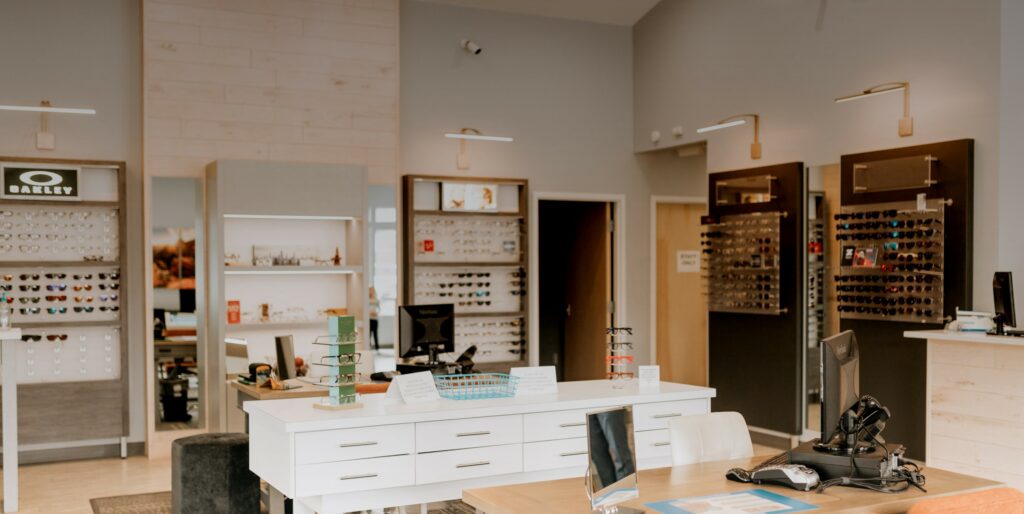
Our Eyewear Brands



Clear Vision
and Healthy Eyes
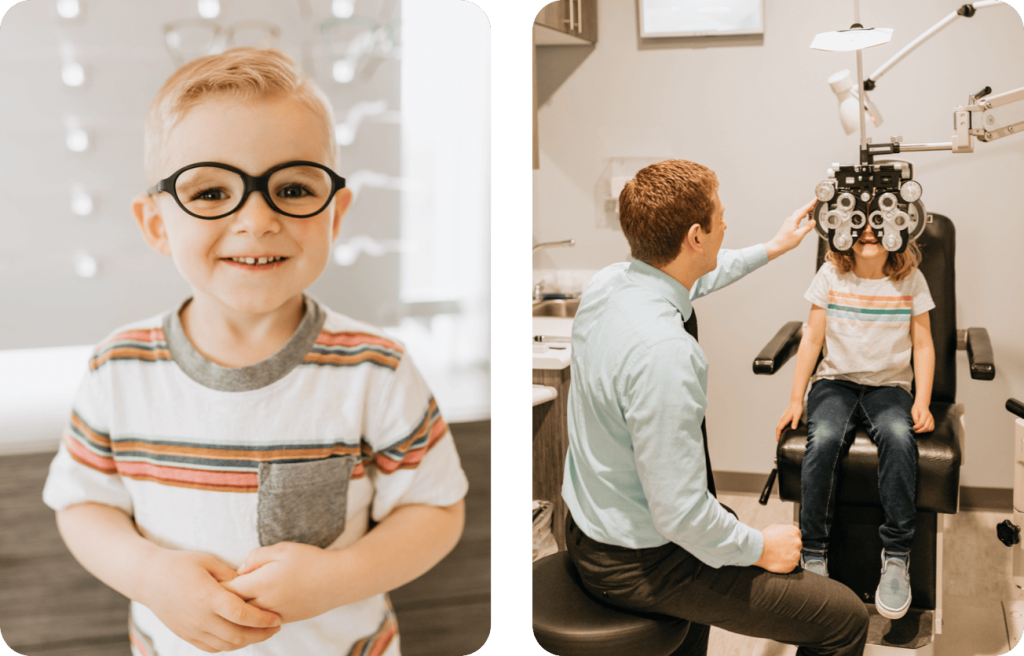
If your child is nearsighted, traditional glasses often aren’t
enough. Protect your child’s vision with myopia control and
reduce their risk of future eye conditions.

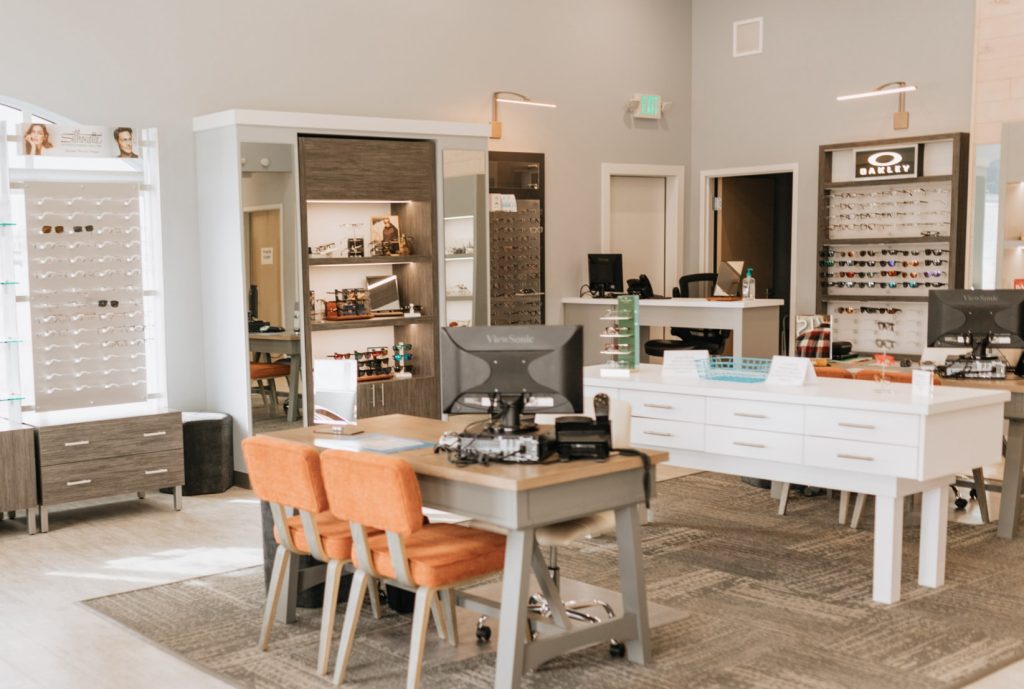
Visit Our Location
We’re located on East Pony Express Parkway, just across from North Clydesdale Drive.
Our Address
- 4408 E Pony Express Pkwy, Suite A
- Eagle Mountain, UT 84005
Contact Information
- Phone: 801-789-3937
- Fax: 801-228-2420
- Email: [email protected]
Hours Of Operation

Visit Our Location
We’re located on East Pony Express Parkway, just across from North Clydesdale Drive.
Our Address
- 4408 E Pony Express Pkwy, Suite A
- Eagle Mountain, UT 84005
Contact Information
- Phone: 801-789-3937
- Fax: 801-228-2420
- Email: [email protected]
Hours Of Operation
Our Google Reviews

What Our Patients Are Saying
Eagle Vision is phenomenal! They were so sweet with my kids and got them in and out quick. Then when my husband came who hates drs, they did a great job going quickly. He picked out some glasses that seemed amazing. Once he got them and used them, he was ready to throw them out a window and roll over them. He was so mad. We came back in and spoke to the gals there and they came up with a solution that worked for us. He is now THRILLED with his glasses and loves them so much. Eagle Vision is an awesome place and we are so happy to go there.
M. Green
Dr. Barney did a great job with my 5 year old son. It was his first time getting his eyes checked and he helped him not to be nervous. It all went very smooth and professional. Great office! Great Dr.!
H. Wolfe
Love having an eye doctor close to my home that accepted my insurance. Did a great job with both me and my children. Very friendly and thorough. Good selection of frames.
J. Gonzalez
Everything went well. The staff was friendly, knowledgeable and got me into my appointment quickly. I thought it was better experience than going to one of those in-store optical centers, which would have cost the same amount or more.
L. Hardy
Dr Barney, Thanks so much for all the help. I have had my exam, prescription, and glasses taken care of. Thank you thank you thank you!!! I also had 3 other family members go to Dr Barney.
Special thanks for offering to fix an older pair of glasses as well. I will try to round up the parts 🙂
Thanks for the text messages keeping me informed of appointment as well as the one about my frames being ready for pick up.
Rock on!
J. Peterson
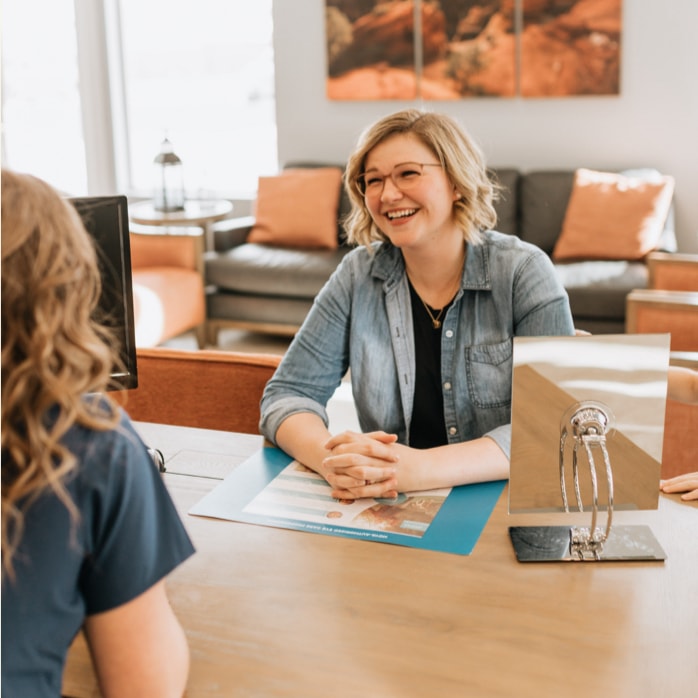
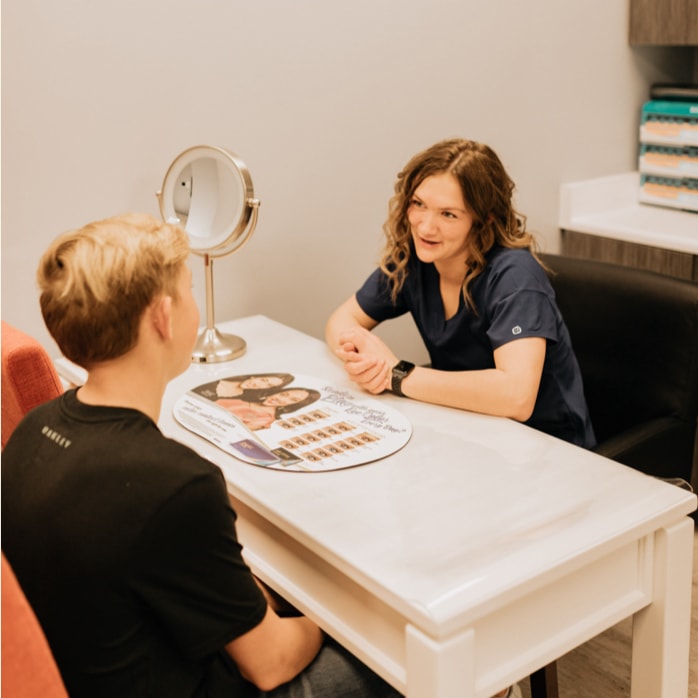
Peek Inside Our Clinic


About Us
Specialty Eye Care
Eyewear & Contacts
Eagle Vision Family Eye Care
- 4408 E Pony Express Pkwy, Suite A
- Eagle Mountain, UT 84005
- 801-789-3937
- 801-228-2420
- [email protected]