
Myopia: A Growing Concern
Myopia is on the rise in the United States. More than 40% of Americans currently have myopia, and it is a serious public health threat worldwide.
Myopia is also known as nearsightedness. It causes near objects to appear clear while far-away objects are blurry or fuzzy. A high myopia prescription significantly increases the risks of glaucoma, cataracts, retinal detachment, and severe vision impairment later in life.
The earlier myopia occurs in children, the more likely it is to become high myopia. By monitoring children for myopia from an early age, we can manage its progression and reduce the risk of eye disease or vision impairment in the future.
Book your child’s appointment today.

What Is Myopia?
Myopia, or nearsightedness, occurs when the eyeball is too long or the front of the eye is too curved. In children, myopia is often caused by the elongation of the eye beyond the normal growth rate.
When the eye is too long, light focuses in front of the retina, rather than directly on it. This causes blurry vision, particularly when looking at faraway objects. When the eyeglass prescription goes above -6.00 Diopters, the eye begins to stretch, increasing the risk of serious eye conditions in the future.
Controlling myopia progression is not only about slowing changes to your child’s prescription and preserving their visual clarity. It is also an important preventive measure to protect their eyes from glaucoma, retinal detachment, cataracts, and other serious conditions in the future.
Our Technology to Monitor Myopia
We monitor myopia progression with the Aladdin-M from Topcon Healthcare. This device allows us to measure the distance from the front to the back of the eye, known as the axial length.
It helps us to establish a baseline of your child’s eyes and track any changes that indicate myopia is worsening. As well, the Aladdin-M measures their refractive error and corneal power, plotting them on a graph over time. Taken together, these measurements show us the speed at which their eyes are changing.
The Aladdin-M also includes a corneal topographer, which helps us fit contact lenses for myopia control, if that is part of your child’s treatment plan.
How Do We Control Myopia?
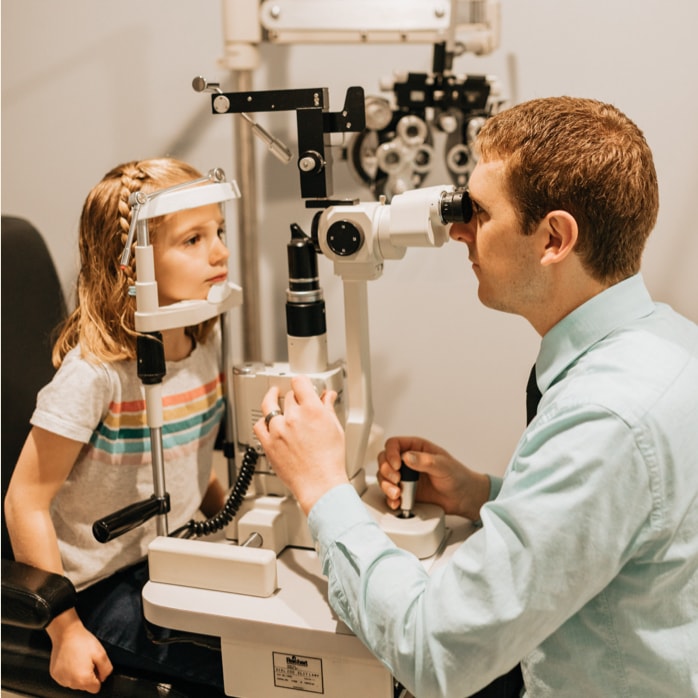
The first step of defense against myopia is booking annual comprehensive eye exams. During your child’s eye exam, we will check for refractive errors and rapid eye growth that indicate the presence of myopia.
If we determine that your child has myopia, we can discuss different myopia management options and determine a treatment plan.
We may recommend more frequent eye exams for children with myopia to monitor their treatment. We use their axial length measurement and monitor any changes to their prescription to determine if our management plan is having the desired effect, or if we need to adjust their treatment.
CooperVision’s MiSight 1 day are FDA-approved contact lenses specially designed to slow the progression of myopia in children. They are soft, daily disposable contact lenses that are suitable for children as young as 8 years old.
MiSight lenses use peripheral defocus technology to signal to the eyes to stop growing longer.
Stellest spectacle lenses by Essilor are specially designed to slow the progression of myopia in children by 71% on average.
These lenses include a central vision zone which corrects their nearsightedness and a peripheral defocus zone which helps send signals to the eye to stop growing. The lenses can be shaped to fit the frames of your child’s choice.
Atropine eye drops are used to dilate (enlarge) the pupils. In low doses, atropine eye drops have been shown to reduce the progression of myopia by disabling the focusing mechanism.
The eye drops are used once a day, at night. You can administer the eye drops for your child, or older children and teenagers may be able to insert them independently.
Healthy Habits for Healthy Eyes
While there is no definitive answer as to what causes myopia, there are several risk factors associated with its development. If a parent has myopia, their children are more likely to develop it. As well, increased indoor activity and screen time are associated with a significantly higher risk of developing myopia.
We recommend children spend about 2 hours outside each day and have limited screen time. Playing outside is important for children’s overall health, but studies have also shown that it reduces the likelihood of children developing myopia.
Outdoor time is good for your eyes, too! Consider planning family outings on the weekends or taking time after school to be outside with your kids.
Regular, comprehensive eye exams are important for children, too. By assessing and monitoring your child’s eyes, we can detect the presence of myopia and design a management plan for it before it impacts the health of their eyes.


Say Goodbye to
Dry, Gritty Eyes
Do your eyes often feel scratchy, gritty, or irritated? You may be experiencing dry eye syndrome, an uncomfortable but common condition that impacts your body’s ability to produce good-quality tears.
We understand the frustration and discomfort that come with dry eye symptoms. That’s why we screen for dry eye in all our adult eye exams. If you receive a diagnosis, you have options.
We offer a variety of at-home and in-office treatment methods, including IPL and radiofrequency therapy. During your appointment, your optometrist will develop a personalized plan tailored to your specific symptoms, the underlying cause, and your individual preferences.
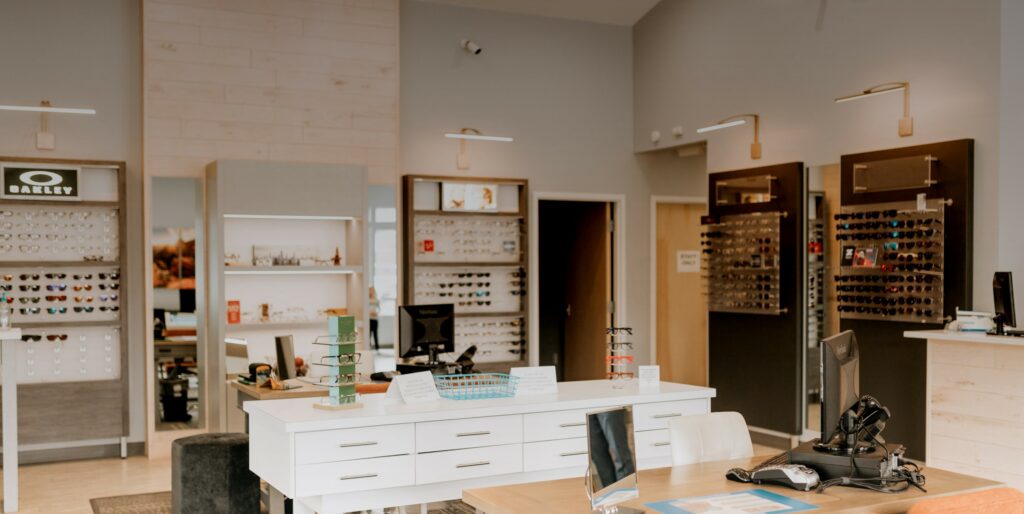
Our Eyewear Brands




Clear Vision
and Healthy Eyes
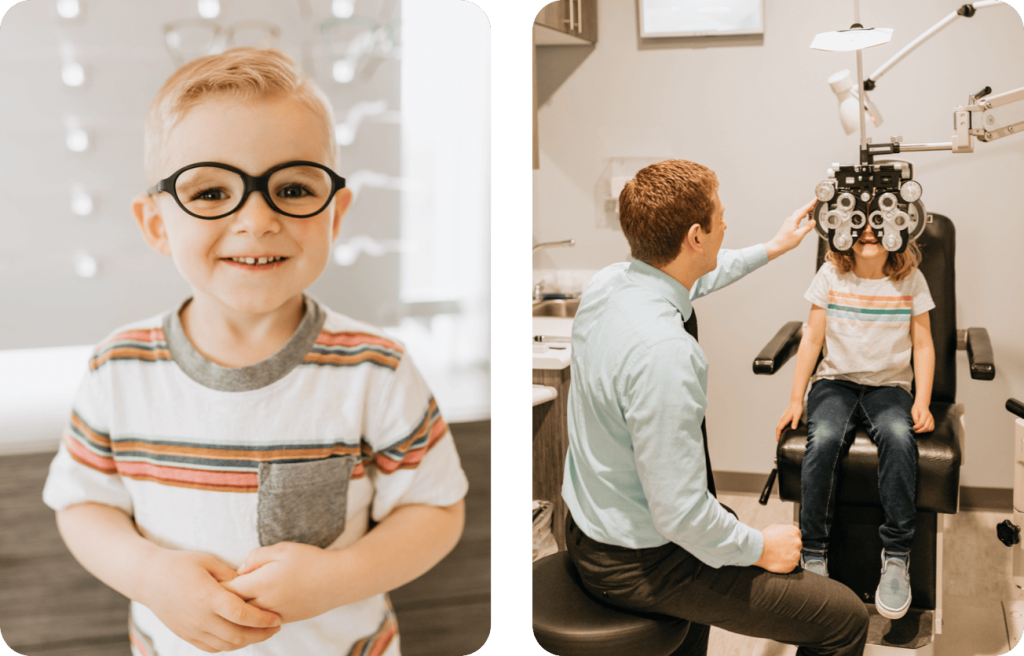
If your child is nearsighted, traditional glasses often aren’t
enough. Protect your child’s vision with myopia control and
reduce their risk of future eye conditions.

Visit Our Location
We’re located on East Pony Express Parkway, just across from North Clydesdale Drive.
Our Address
- 4408 E Pony Express Pkwy, Suite A
- Eagle Mountain, UT 84005
Contact Information
- Phone: 801-789-3937
- Fax: 801-228-2420
- Email: [email protected]
Hours Of Operation

Visit Our Location
We’re located on East Pony Express Parkway, just across from North Clydesdale Drive.
Our Address
- 4408 E Pony Express Pkwy, Suite A
- Eagle Mountain, UT 84005
Contact Information
- Phone: 801-789-3937
- Fax: 801-228-2420
- Email: [email protected]
Hours Of Operation
Our Google Reviews

What Our Patients Are Saying
Eagle Vision is phenomenal! They were so sweet with my kids and got them in and out quick. Then when my husband came who hates drs, they did a great job going quickly. He picked out some glasses that seemed amazing. Once he got them and used them, he was ready to throw them out a window and roll over them. He was so mad. We came back in and spoke to the gals there and they came up with a solution that worked for us. He is now THRILLED with his glasses and loves them so much. Eagle Vision is an awesome place and we are so happy to go there.
M. Green
Dr. Barney did a great job with my 5 year old son. It was his first time getting his eyes checked and he helped him not to be nervous. It all went very smooth and professional. Great office! Great Dr.!
H. Wolfe
Love having an eye doctor close to my home that accepted my insurance. Did a great job with both me and my children. Very friendly and thorough. Good selection of frames.
J. Gonzalez
Everything went well. The staff was friendly, knowledgeable and got me into my appointment quickly. I thought it was better experience than going to one of those in-store optical centers, which would have cost the same amount or more.
L. Hardy
Dr Barney, Thanks so much for all the help. I have had my exam, prescription, and glasses taken care of. Thank you thank you thank you!!! I also had 3 other family members go to Dr Barney.
Special thanks for offering to fix an older pair of glasses as well. I will try to round up the parts 🙂
Thanks for the text messages keeping me informed of appointment as well as the one about my frames being ready for pick up.
Rock on!
J. Peterson
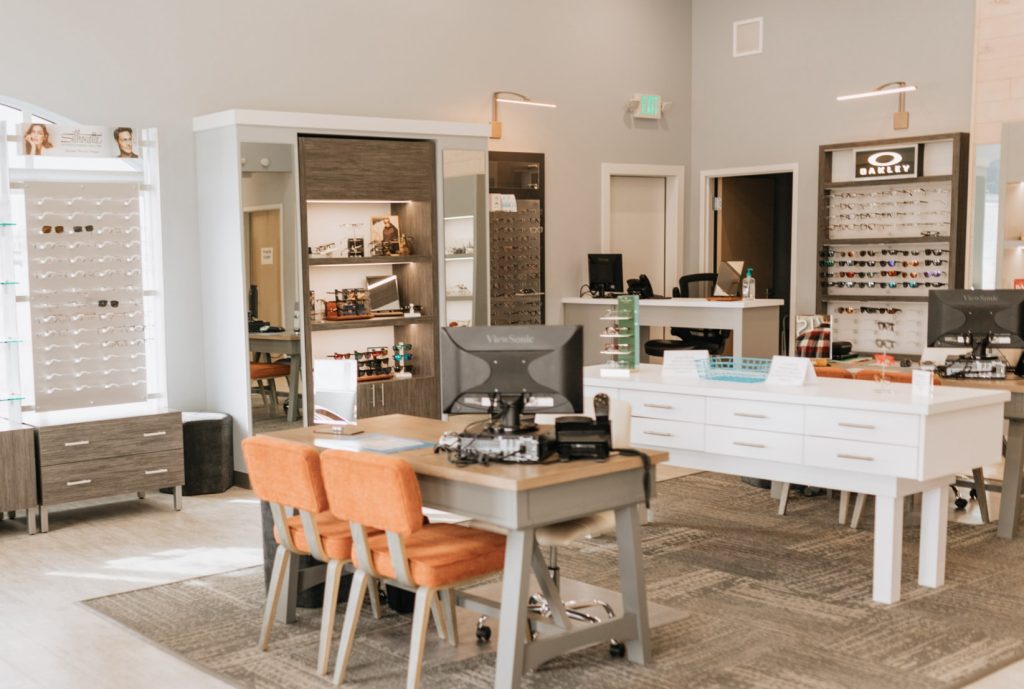
Peek Inside Our Clinic



About Us
Specialty Eye Care
Eyewear & Contacts
Eagle Vision Family Eye Care
- 4408 E Pony Express Pkwy, Suite A
- Eagle Mountain, UT 84005
- 801-789-3937
- 801-228-2420
- [email protected]